SAUL LEITER

Posted on 2016-02-08

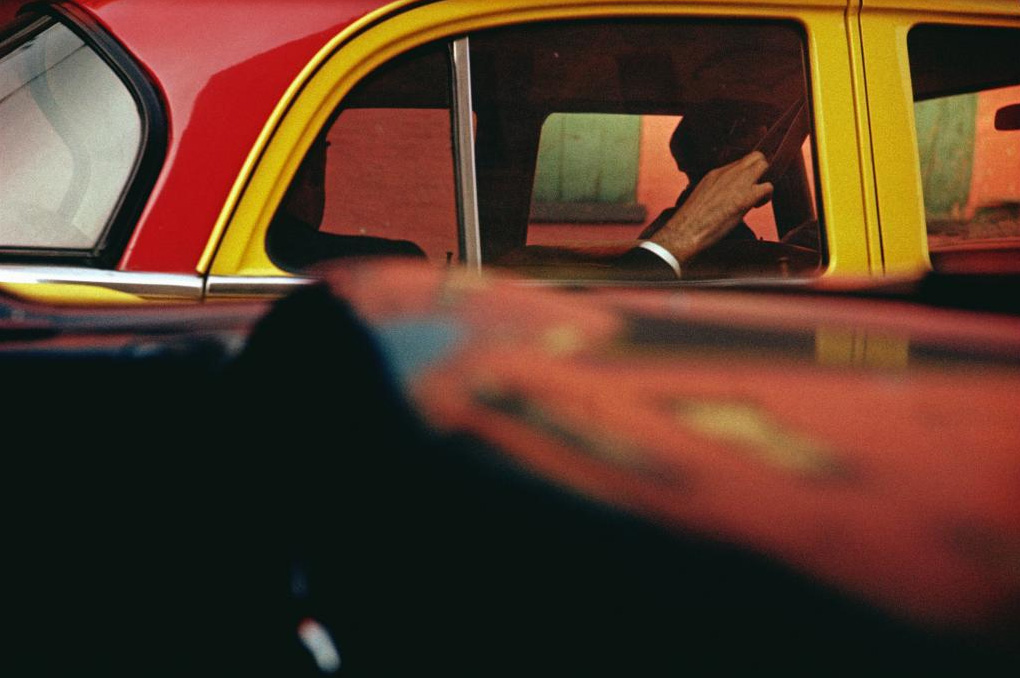
Saul Leiter moved to New York intent on becoming a painter, which he continued in parallel with his photography, yet ended up working for magazines such as Harper’s Bazaar, Elle and British Vogue and became known for his fashion work.

As early as 1946, and thus two decades before the 1970s new colour photography school (William Eggleston, Stephen Shore et al), Leiter was using Kodachrome colour slide film for his free artistic shots, despite it being despised by artists of the day. Instinctively for him, colour was the picture.

“I don’t have a philosophy, I have a camera.” Saul Leiter

An iconoclast who pursued his vision through signature framing devices, bold hues and relective surfaces, Leiter manages to transform seemingly ordinary street scenes in close proximity to his New York apartment into visual poetry.

Opposite – Taxi, 1957

Exhibition runs through till April 3rd, 2016

The Photographers’ Gallery
16-18 Ramillies Street
London
W1F 7LW

thephotographersgallery.org.uk


BERNHARD FUCHS

Posted on 2016-02-08

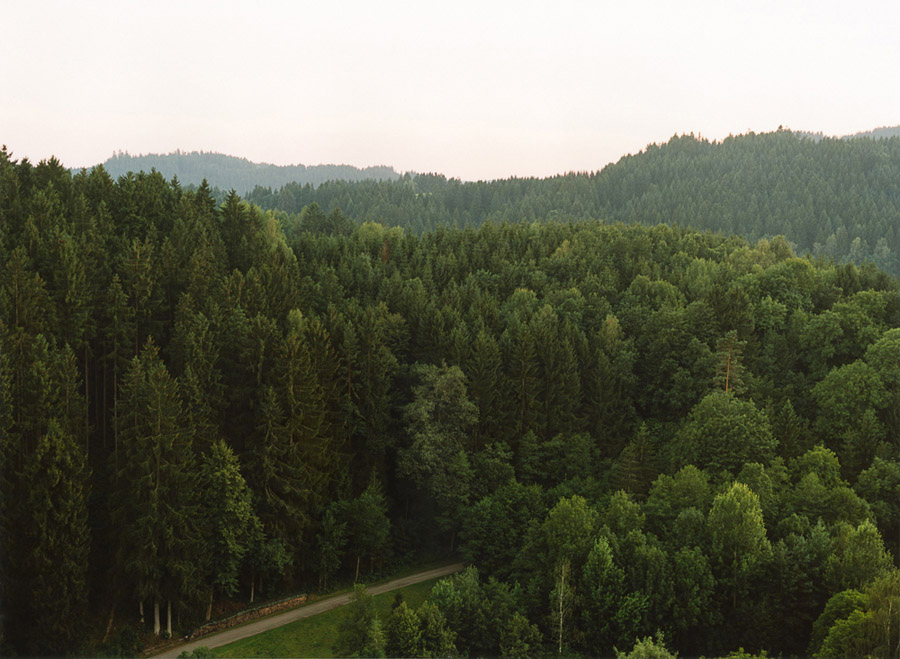
The works originated between 2010 and 2014 in the Upper Austrian Mühlviertel are neither solely images of forest nor landscapes – “they are something in between”, says Bernhard Fuchs. Living in Dusseldorf today the artist describes the Mühlviertel as “the place of his origin”, which is a recurrent theme in his works. This intimacy with the “internalized area” is reflected in the atmospheric pictures. Here Bernhard Fuchs deals “with the prosaicness, with unspectacular situations.” Through a selective attention this prosaicness becomes something special.

The woodlands by Bernhard Fuchs are always deserted and are presented in different seasons – the nature itself becomes the main event and similar to painting by Jacob van Ruisdael the sky and the light become the actual protagonists. The act of walking in the landscape and of perception are the integral parts in works by Bernhard Fuchs, whom Helga Meister (Kunstforum International) precisely described as a “meditative poet”.

At the basis of the works by Bernhard Fuchs lies the interest towards ephemeral everyday situations which unfold their calm impression through an inner reflection. In doing so the artist oscillates between the narrative level of his personal memories and the precise expressions of formal-artistic questions.

Opposite – Haslach, Sommer 2012

Exhibition runs through till February 20th, 2016

Galerie Wilma Tolksdorf
Hanauer Landstrasse 136
Frankfurt am Main 60314
Germany

www.wilmatolksdorf.de


MAROESJKA LAVIGNE – LAND OF NOTHINGNESS

Posted on 2016-02-08

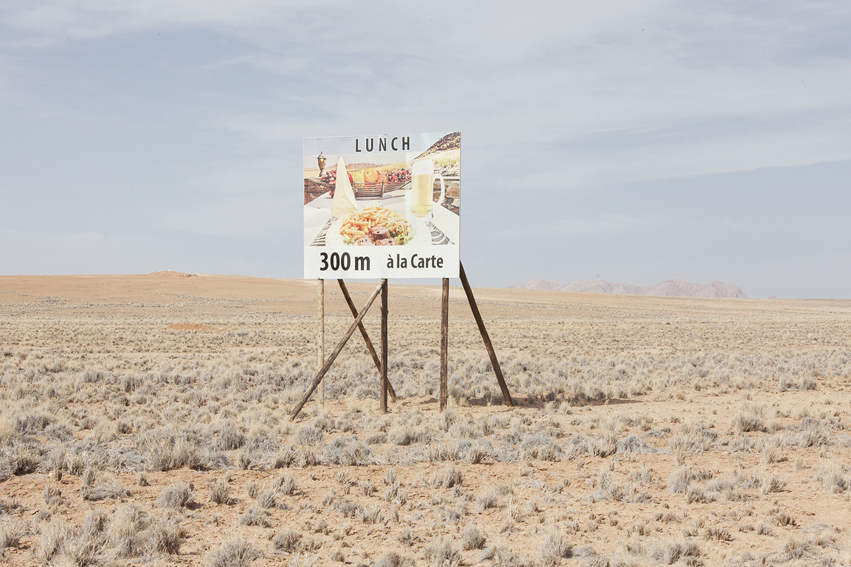
Namibia is a country of deserts with barren stretches that yield only to subtle variations of the same aridness. Maroesjka Lavigne invites you to step into this unforgiving environment with her newest work, Land of Nothingness. From this desolation, Lavigne composes a visual symphony. The animals and the very landscape in which she finds herself appear to respond to her camera lens. The resulting images are harmonious compositions that showcase the natural rhythm of the desert with wildlife sightings and staggering landscapes as highlights to the monotony.

Though at times the sameness can be hard to navigate, Land of Nothingness uncovers the unexpected beauty often hidden in plain sight on the scorched earth of the Namib. Lavigne reveals the carefully balanced order that comes with life on an unrelenting desert. Four Giraffes shows the cadence in which all of nature moves. These giants tower over every other animal on Earth but are dwarfed by the majestic wildness of the desert, becoming a part of the pattern of the land. Evidence of human encroachment on the natural beauty of Namibia is few and far between, this is a place at the mercy of the rule of the elements.

Gaze shows just how minute human influence is when their presence can be nearly mistaken for parched vegetation. Lavigne has ventured into a world devoid of the consumer culture and instant gratification to which we have grown accustomed. In this is a place where hours of driving pass before you see anything other than sand dunes you must confront your own insignificance.

Opposite – Lunch, Namibia, 2015

Exhibition runs through till March 26th, 2016

Robert Mann Gallery
525 West 26th Street
New York
NY
10001

www.robertmann.com


HIRO

Posted on 2016-02-01

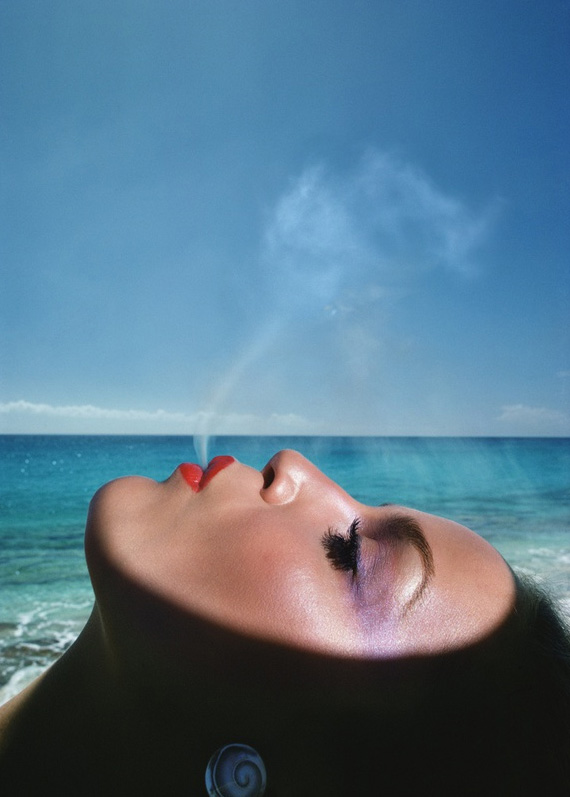
This retrospective of Hiro’s photographs is just a small selection from his diverse and dynamic ouevre and displays Hiro, as he is widely regarded, as a photographer unlike any other.

‘The world of Hiro’s photographs, bordered by a shoreline, is unlike any place you have ever been… Hiro’s world encompasses the separate domains of fashion, portraiture, still-life and studies of the human body. His eye scrutinises men and machines with equal focus.’ (Mark Holborn)

Known for the originality of his photographs, Hiro’s photographic career began at Harper’s Bazaar in New York as a fashion, still-life and portrait photographer. Shortly after arriving in America from Japan in 1954, with his childhood memories of The Orient, which have a place in the genesis of his work, Hiro landed an apprenticeship in Richard Avedon’s studio. Avedon soon sent Hiro to legendary art director Alexey Brodovitch after he proved too talented not to work independently, and within a few years Hiro had risen to extraordinary fashion photography heights. In January 1982 American Photographer magazine devoted their entire issue to Hiro, asking the question “Is this Man America’s Greatest Photographer?” Hiro began working under Brodovitch’s direction in 1956 and in 1963 he became the only photographer under contract at Harper’s Bazaar, a position he kept for the next ten years. Now in his 80’s, although no longer under contract, Hiro continues to take assignments with the magazine. Hiro lived up to Brodovitch’s dictum, ‘If you look in your camera and see something you’ve seen before, don’t click the shutter.’ Richard Avedon described Hiro as ‘a visitor all his life’, enabling Hiro, neither completely Eastern or Western, to document both cultures in his work with a perception that only comes from a certain detachment.

Opposite – Jerry Hall, Saint Martin, French West Indies, 1975

Exhibition runs through till March 12th, 2016

Hamiltons Gallery
13, Carlos, Place
London
W1K 2EU

www.hamiltonsgallery.com


PETER LINDBERGH

Posted on 2016-02-01

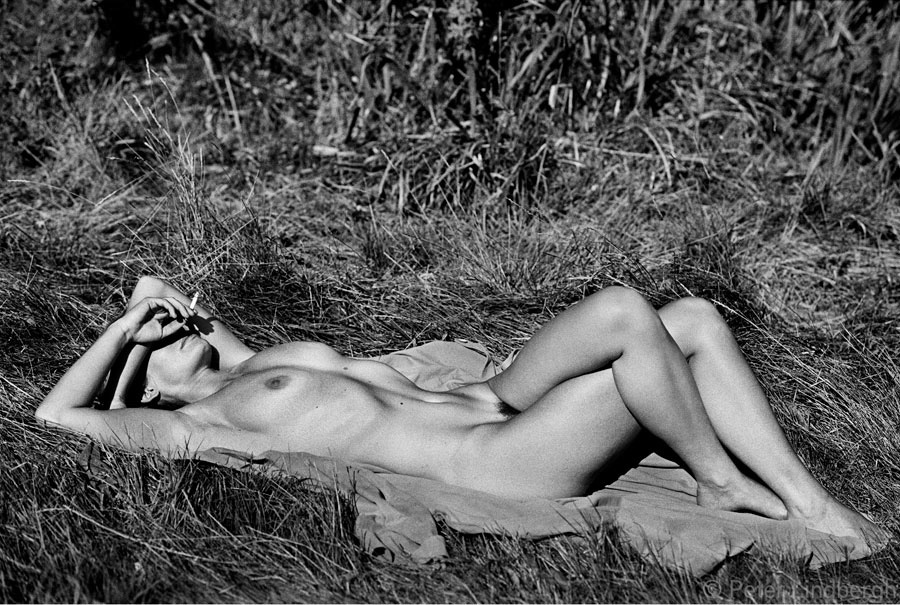
Lindbergh’s now-iconic photographs of women derive inspiration from early narrative cinema and street photography, in their fleeting observations and compositional elegance. His Eastern European heritage can be traced in the stark and guileless realism that frames the feminine beauty of his subjects.

In his editorial work for Vogue, Harper’s Bazaar, Interview, and many other international magazines, Lindbergh replaces staged, calculated glamour with a vérité approach, enhanced by his use of high-contrast black-and-white photography. He uses body movement, in particular modern dance, to celebrate the human form in a way that carries elements of both antiquity and modernity.

Spanning the last thirty years, the exhibition testifies to Lindbergh’s impact on the world of fashion photography, and his contribution to portraiture in general. The beauty of his female subjects is purposeful, self-possessed, and uninhibited. With little styling or setting to divert attention, Lindbergh’s approach emphasizes the raw physical grace of his subjects.

In a diptych of Monica Bellucci, one image holds her untamed and purposeful stare as she walks toward the camera, while in the other she looks away, apparently absorbed in a private moment far from the camera’s eye. In an homage to the late choreographer Pina Bausch, five models merge in an interlocking movement, their limbs and curves becoming elements of pure abstraction. In another photograph, Karen Elson’s pale stillness recalls classical stone statuary.

Opposite – Cordula Reyer, Camargue, France, 1993, 2003

Exhibition runs through till April 23rd, 2016

Gagosian Gallery
3 Merlin Street
Athens 10671

www.gagosian.com


SKIN&BLISTER

Posted on 2016-02-01

Skin&Blister is a collective of 7 female photographers who graduated from London College of Communication in 2012. They formed the collective to create a dynamic and supportive environment through which to continue sharing ideas, discussions and critiques, make work, generate exhibition opportunities and curate shows. They have participated in a number of UK and international photography exhibitions, curated shows and featured in publications including the Guardian, Dazed & Confused and Hunger TV. Their work explores female identity and is part of a lively and growing realm of re-imagining the “collective” by young women utilising a variety of public platforms to question female perception in today’s image-driven culture.

Opposite – Sophie Davis

Exhibition runs through till March 10th, 2016

Photofusion
7A Electric Lane
London
Brixton
SW9 8LA

www.photofusion.org