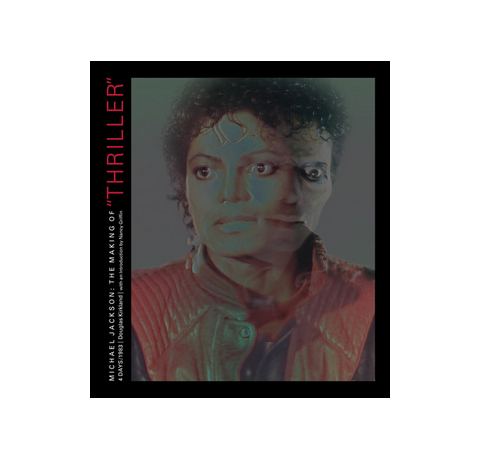
MICHAEL JACKSON – THE MAKING OF THRILLER

Posted on 2014-06-30

Hundreds of never-before-seen photos documenting the making of the greatest video of all time are published in this ultimate tribute to the King of Pop. Fans and music lovers will gain access to exclusive, behind-the-scenes images of the artist, both in high performance mode and relaxing on the set. They’ll watch Michael Jackson transform into the zombie and werewolf characters and see intimate photos of the public and private faces of the legendary musician at the height of his career. Here, Kirkland and journalist Nancy Griffin, a bestselling author in her own right, share their extraordinary experience on the set of “Thriller.”

The astonishing photos are accompanied by interviews and quotations from musicians and celebrities, including Sir Paul McCartney, Beyonce, Steven Spielberg, Diddy, Quincy Jones, Justin Timberlake, Alicia Keys and many more — all of whom were influenced by the work of Michael Jackson and this groundbreaking video.

glitteratiincorporated.com


EIKOH HOSOE – KAMAITACHI

Posted on 2014-06-23

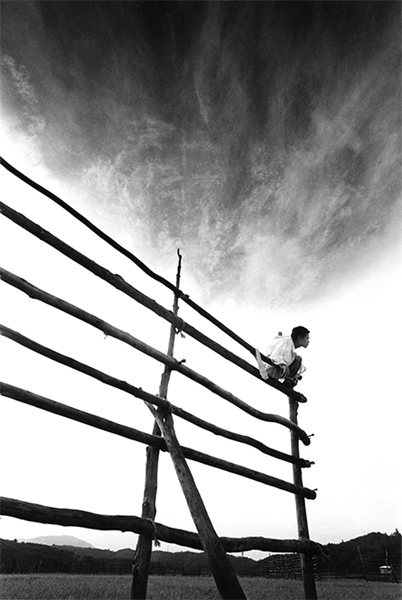
“Kamaitachi” has traditionally been depicted as a weasel specter with sharp kama (sickle) in place of each arm. It also refers to the phenomenon of skin being cut, touched by the vortex-carring small whirlwind, as if struck by the sickle blade of the specter. Hosoe began shooting his “Kamaitachi” series in 1965, which takes the Butoh dancer Tatsumi Hijikata as its subject. Hosoe shot the series initially in Hijikata’s hometown Akita, then later in Shibamata and Sugamo in Tokyo, as if to trace the photographer’s own postwar trajectory. The series was published as a book in 1969. It overlaid the image of the Kamaitachi on Hijikata, who was searching for his origins within his hometown. It was also a way for Hosoe to come to terms with his own experiences of wartime evacuation in Yamagata, which he had nearly forgotten at the time. In an interview, he commented, “Where will the wartime experience of evacuation, postwar ruins and experience of living in Tokyo, and the current economic prosperity and peace all go?” 1 Hosoe explained that through the medium of Hijikata’s body, who shares the blood and culture in the Northeast, “I ‘documented’ my ‘memories’.” 2 The resulting works, spun out of the relation between photographer and subject, have a highly narrative quality.

In the village, he played with children, was laughed at by farmers along the roadside, shat in the middle of a field, attacked a bride, kidnapped a baby, and ran through the rural landscape. Almost all the shooting was done guerrilla style in a flash. This was something that could only be achieved through photography. No other medium – film, television, painting, or novel – could have been used in its place. At that moment, I was certain of the superiority of photography.

Opposite – Eikoh Hosoe, “Kamaitachi” #8, 1965 / late 1960s – early 1970s

Exhibition runs through to July 5th, 2014

Taka Ishii Gallery Photography
AXIS Building 2F, 5-17-1
Roppongi, Minato-ku
106-0032 Tokyo
Japan

www.takaishiigallery.com


THOMAS RUFF – NEW WORK

Posted on 2014-06-23

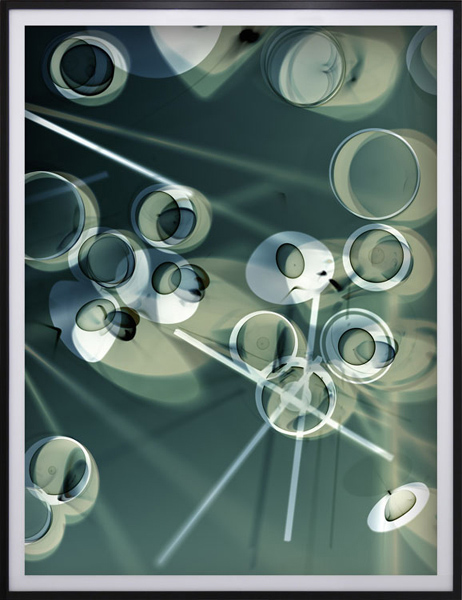
For the current exhibition of two photographic series, Thomas Ruff has once again adopted new techniques: on the one hand, digitally produced colour photograms, and on the other, digitally processed vintage photographs with the aesthetic appearance of negatives.

Photograms are black and white photographic images created by placing objects directly onto light-sensitive material and exposing it to light, resulting in the objects being rendered as forms in light and shadow. It is actually an old technique, used by such notable artists as Lazlo Moholy-Nagy, Man Ray and Arthur Siegel, for instance, and was especially popular at the Bauhaus in the 1920s.
Thomas Ruff now builds these objects digitally using a 3D software programme, which allows him to manipulate and arrange them entirely according to his own aesthetic criteria and, above all, in colour. Fully dedicated to the innovative potential of digital image processing, he conveys a new visual aesthetic of sumptuously colourful surfaces – compositionally freewheeling images using highly sophisticated, cutting-edge technology.

Another of Thomas Ruff’s interests is the possibility of inverting images – in other words, producing negatives of them. For this, he uses existing historical images and negatives. This creates an entirely different effect, expressing an emphasis and concentration on compositional aspects. The new group of works he has been creating since this year, titled Negatives, is represented in our exhibition by the series neg◊lal, which is being shown to the public for the very first time. For this series, Ruff digitally reworked old technical shots of aeronautic industry prototypes being tested in the wind canal, manipulating light and shadow and altering the original sepia tone to transform them into shimmering blue images with an altogether unfamiliar and distinctive aesthetic.

Opposite – phg.03_II, 2014

Exhibition runs through to August 2nd, 2014

Mai 36 Galerie
Rämistrasse 37
CH-8001 Zurich
Switzerland

www.mai36.com


EDSON CHAGAS – FOUND NOT TAKEN

Posted on 2014-06-23

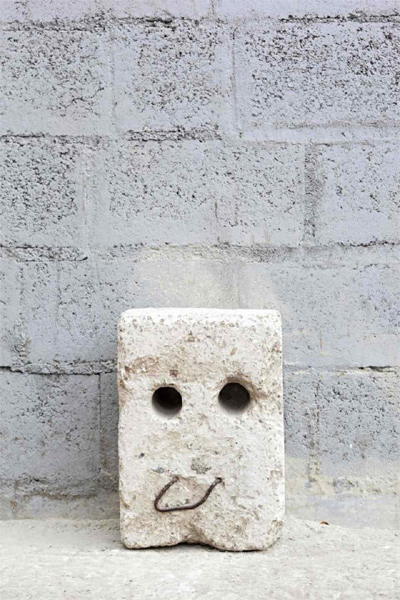
Found Not Taken is an ongoing series of photographs of objects found on the streets of Luanda, Angola, Newport, Wales and London, UK; cities where the artist has lived and worked. The project stems from Chagas’ interest in cities and what they tell us about contemporary consumer habits. The artist is particularly concerned about increased patterns of consumerism in his hometown. Since the end of the civil war in 2002, Angola’s economy has become the fastest growing in Africa and the sudden influx of wealth is rapidly transforming its capital, Luanda.

Found Not Taken is a catalogue of unwanted, abandoned things, which highlights the excess of a growing consumer culture, but it is not purely a documentary project. Sometimes the artist repositions objects to produce new compositional arrangements. These found objects are recycled into a new relationship with their environment and into the realm of discourse and ideas. Chagas’ work is a subtle, often playful intervention. The aesthetic is minimal, almost abstract – with simple forms and the surface texture of the city rendered in great detail. At the same time, the relationship between object and context is central to the meaning of the work, and the new compositions that he creates – both in the actual city and in the form of an image – suggest other possible narratives and different ways of reading and experiencing the city.

Opposite – Found Not Taken, Luanda, 2013

Exhibition runs through to August 3rd, 2014

Belfast Exposed Photography
The Exchange Place
23 Donegall Street
Belfast
BT1 2FF

www.belfastexposed.org


GARY WINOGRAND

Posted on 2014-06-16

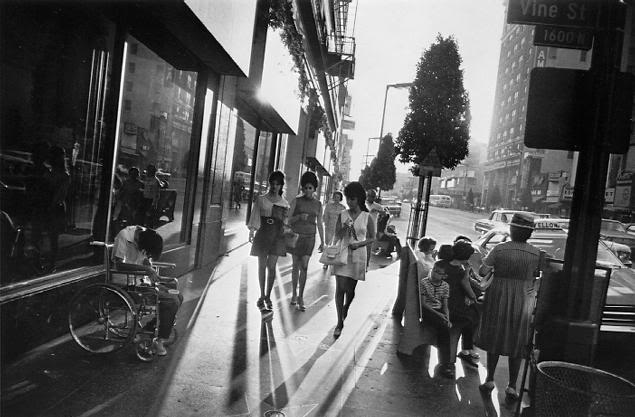
The first retrospective in twenty-five years of work by Garry Winogrand (1928–1984)—the renowned photographer of New York City and of American life from the 1950s through the early 1980s—this exhibition will bring together more than 175 of the artist’s most iconic images, a trove of unseen prints, and even Winogrand’s famed series of photos made at the Metropolitan Museum in 1969 when the Museum celebrated its centennial. It offers a rigorous overview of Winogrand’s complete working life and reveals for the first time the full sweep of his career.

Born in the Bronx, Winogrand did much of his best-known work in Manhattan during the 1960s, and in both the content of his photographs and his artistic style he became one of the principal voices of that eruptive decade. Known primarily as a street photographer, Winogrand, who is often associated with famed contemporaries Diane Arbus and Lee Friedlander, photographed with dazzling energy and incessant appetite, exposing some twenty thousand rolls of film in his short lifetime. He photographed business moguls, everyday women on the street, famous actors and athletes, hippies, politicians, soldiers, animals in zoos, rodeos, car culture, airports, and antiwar demonstrators and the construction workers who beat them bloody in view of the unmoved police. Daily life in postwar America—rich with new possibility and yet equally anxious, threatening to spin out of control—seemed to unfold for him in a continuous stream.

Opposite – Untitled, Los Angeles, 1969

Exhibition runs from June 27th till September 21st, 2014

The Metropolitan Museum of Art
1000 Fifth Avenue
New York
10028-0198

www.metmuseum.org


BOB MAZZER – UNDERGROUND

Posted on 2014-06-16

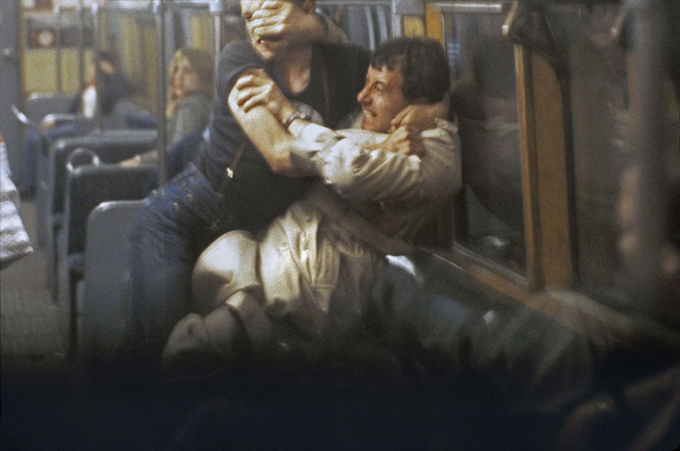
While working as a projectionist in a porn cinema in Central London during the 1980s, Bob Mazzer began photographing on the tube during his daily commute, creating irresistably joyous pictures alive with humour and humanity. This photographic social history then remained unseen and unexhibited until recently begin discovered.

“Every day I travelled to King’s Cross and back. Coming home late at night, it was like a party and I felt like the tube was mine and I was there to take the pictures.” – Bob Mazzer.

Opposite – Fight, 1980’s

Exhibition runs through to July 13th, 2014

Howard Griffin Gallery
189 Shoreditch High Street
London
E1 6HU

howardgriffingallery.com