NICOLAS MULLER (1913-2000) – TRACES OF EXILE

Posted on 2014-12-22

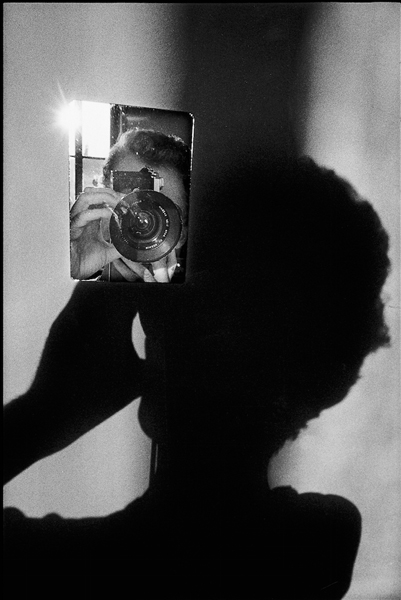
Although little known in France, Nicolás Muller (Orosháza, Hungary, 1913–Andrín, Spain, 2000) was one of the leading exponents of Hungarian social photography. Like many of his compatriots — Eva Besnyö, Brassaï, Robert Capa, André Kertész and Kati Horna — he spent much of his life in exile: born into a bourgeois Jewish family, he left Hungary shortly after the Anschluss in 1938, spending time in Paris, Portugal and Morocco before finally setting in Spain. This experience, and the situations and people he encountered along the way, did much to shape Muller’s work.

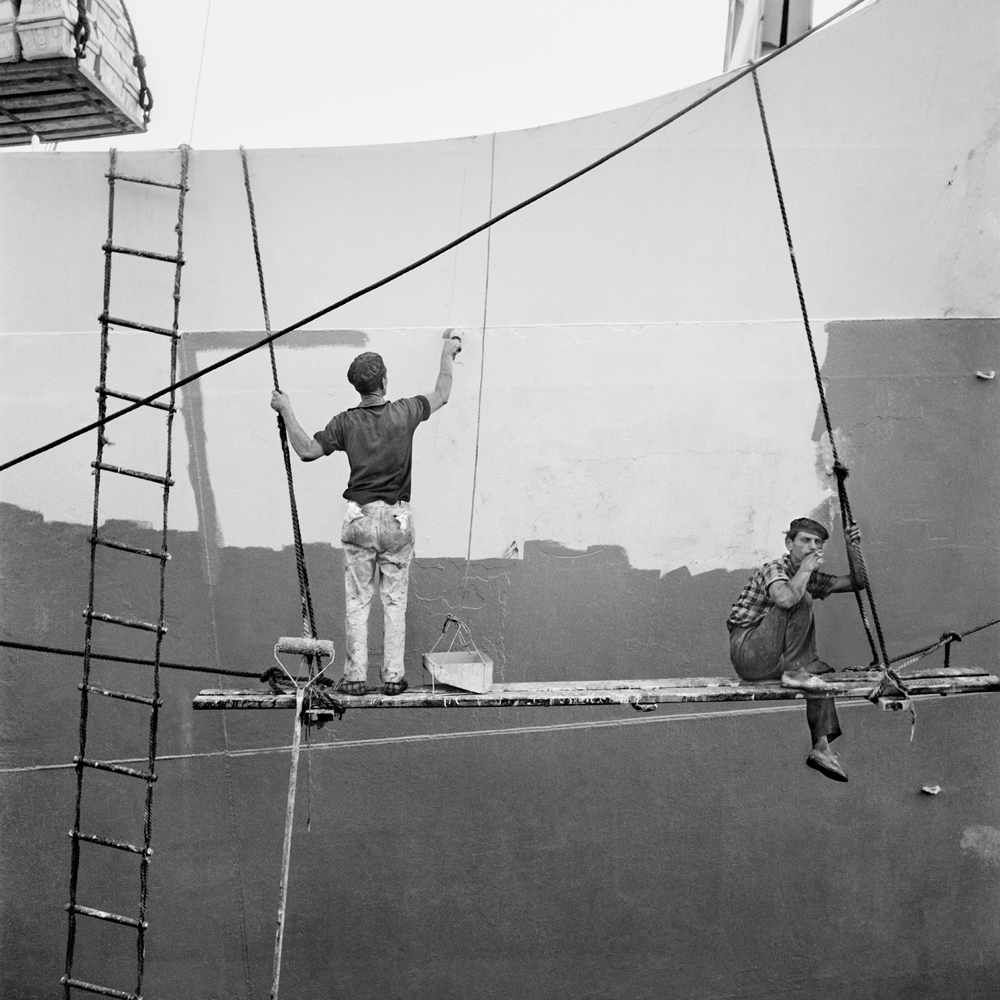
Like many of his fellow Hungarian photographers at the time, in the 1930s Muller worked in a humanist, documentary vein, evincing a strong sense of sympathy for the world of labour and the most modest members of society. His interest in the working man’s experience would remain a hallmark of his photographs. As the social and political contexts changed, he photographed agricultural labourers and dockers in the ports of Marseille and Porto, then children and street vendors in Tangiers, and life in the countryside. Later, he photographed cultural and social figures in Madrid.

Opposite – Carénage du navire. Canaries, 1964

Exhibition runs through till May 31st, 2015

Château de Tours
25 avenue André Malraux
37000 Tours
France
www.jeudepaume.org


UGO MULAS – THE SENSITIVE SURFACE

Posted on 2014-12-22

By the time of his untimely death in 1973, Ugo Mulas was recognized as a master of portraiture, reportage, fashion and advertising photography. He photographed artists and artworks during one of the most dynamic periods in the history of art, the 1960s, when he portrayed the likes of Jasper Johns, Alexander Calder, Andy Warhol, Marcel Duchamp and countless members of the Italian avant-garde like Lucio Fontana. Lesser known is the work Mulas made at the end of the 1960s, work that explores the conceptualist potential of photography at that time. This exhibition features this robust period of experimentation centered in the artist’s studio dating from 1969-1973. Complimenting this late period in Mulas’s career are selections of the artist’s lesser-known color work and a few standout examples of the artist’s enlarged contact sheets, a motif that found recurrence in Mulas’s work following a seminal trip to New York City in 1964.

Collaborating with Bruno Munari and Luciano Caramel, Mulas co-organized Campo Urbano, an exhibition of performances and events that took place on the streets of Como in 1969. Recognizing the photograph as inherently performative in its own right, Mulas shot sequences of images askew and oblique at times that played with the unpredictable, ephemeral quality of the happenings. Often printed and enlarged directly from the contact sheets, Mulas’s Campo Urbano works subvert the narrative, chronological framing of the event to become something else entirely, another kind of art work or experience.

Exhibition runs through till February 14th, 2015

Galleria Lia Rumma Milan
Via Stilicone, 19
20154 Milano

www.liarumma.it


LINA SCHEYNIUS – EXHIBITION 03

Posted on 2014-12-15

This will be Scheynius’ first solo exhibition in Japan and it will include about 16 works.
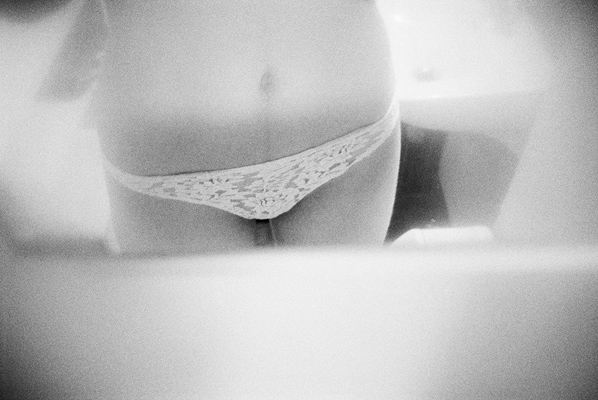
Born in Vänersborg in southeast Sweden in 1981 and currently based in London, Lina Scheynius became a photographer after a career in modeling. After working as a model, a photographic subject and target of idealistic and conceptual projection as well as alteration, Scheynius began shooting photographs out of a desire to reconstruct the relationship between “the looker” and “the looked” and a continued interest in photographic expression, which candidly mediates that relation.

I picked up a lot from growing up in an environment where I had access to cameras and photographic books. My dad took loads of pictures of us, and watching the family slides with the projector was always amazingly fun for me. And after that I started modeling and saw how most professional fashion photographers work – and I learnt how I don’t want to work.

Lina Scheynius

Opposite – Untitled (Diary), 2002

Exhibition runs through till January 31st, 2015

Taka Ishii Gallery Photography/Film
AXIS Building 2F, 5-17-1
Roppongi, Minato-ku
Tokyo 106-0032

www.takaishiigallery.com


POSITIONS – EVA STENRAM

Posted on 2014-12-15

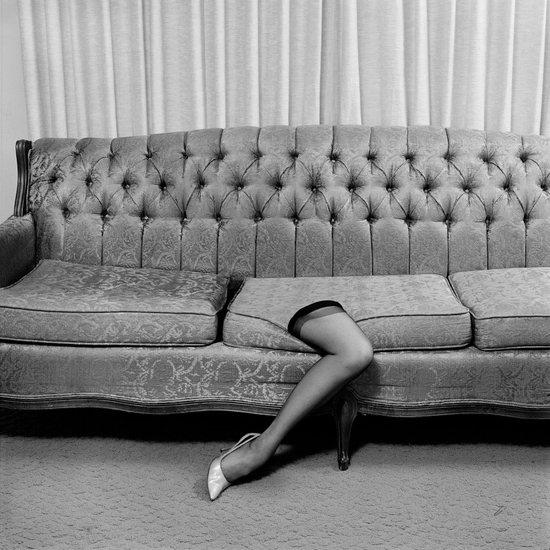
Parts uses 1960s pin-up photographs as its source material. The pictures are digitally altered, obliterating most of the model and leaving only a leg intact. The resultant mood is macabre – the severed limb does not entice and the photograph’s original erotic effect is turned on its head. When just one leg of the model remains, this leg calls attention to the rest of the scene. Viewers may try to piece together the original position of the model, or perhaps accept the leg as an absurd interior decoration or prop.

The new works use fragments of positions from pin-up images to describe potential movement, for example a photographic score made from a sequence of poses repeated in modulating patterns. Longer or shorter exposure times while printing the pictures introduce the temporal element of the sequence. Another new work utilises three risqué photographs taken by Irving Klaw in the 1950s of Bettie Page and other pin-up models. The purchased photographs are reframed, so that a passe-partout conceals most of the photographs, leaving only an isolated section of each picture available for the viewer to see.

Exhibition runs from January 16th to March 22nd, 2015

Siobhan Davies Studios
85 St George’s Road
London SE1 6ER

www.siobhandavies.com


ALBERT RENGER-PATZSCH

Posted on 2014-12-15

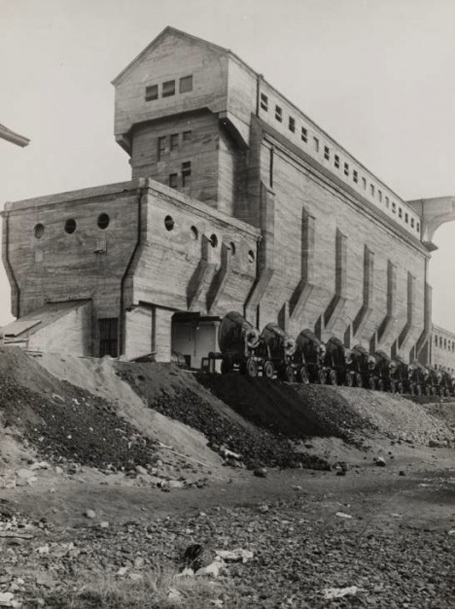
German photographer Albert Renger-Patzsch was a pioneering figure in the New Objectivity movement, which sought to engage with the world as clearly and precisely as possible.
Rejecting the sentimentality and idealism of a previous generation, Neue Sachlichkeit (New Objectivity) emerged as a tendency in German art, architecture and literature in the 1920s. Applying this attitude to the field of photography, Renger-Patzsch espoused the camera’s ability to produce a faithful recording of the world. ‘There must be an increase in the joy one takes in an object, and the photographer should be fully conscious of the splendid fidelity of reproduction made possible by his technique’, he wrote.
This selection reflects the range of subjects that Renger-Patzsch returned to throughout his career. It includes his early wildlife and botanical studies, images of traditional craftsmen, formal studies of mechanical equipment, commercial still lifes, and landscape and architectural studies. His images of the Ruhrregion, where he moved in 1928, document the industrialisation of the area in almost encyclopaedic detail. All of his work demonstrates his sustained interest in the camera’s relationship to the beauty and complexity of the modern world.

In 1928 Renger-Patzsch published The World is Beautiful, a collection of one hundred photographs whose rigorous sensitivity to form revealed patterns of beauty and order in the natural and man-made alike. Embodying a new, distinctly modern way of looking at the world, the book established Renger-Patzsch as one of the most influential photographers of the twentieth century.

Exhibition runs through till December 31st, 2014

Tate Modern
Bankside
London
SE1 9TG

www.tate.org.uk


PAUL CHAN – OFF SAFETY

Posted on 2014-12-08

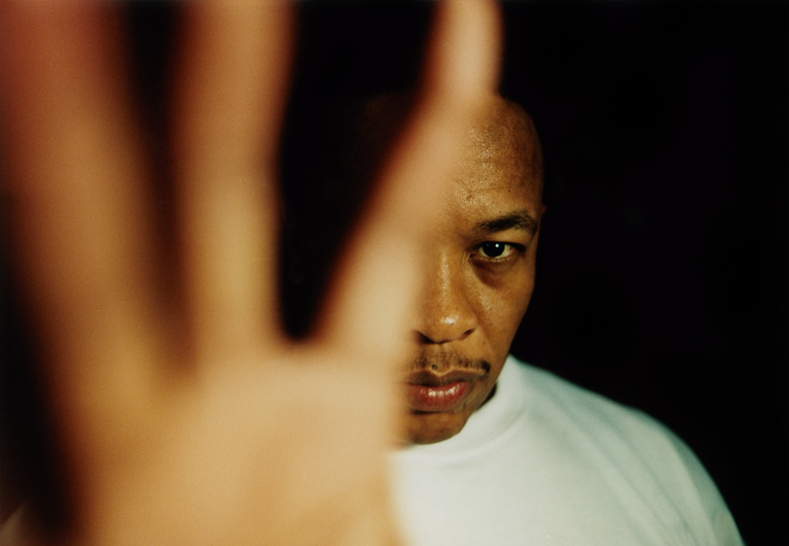
From 1997 – 2003, Paul Chan photographed numerous rappers, skateboarders & actors for a publication called Kronick Magazine. Right on the cusp of the Internet and digital cameras, this was a time when we still relied on film cameras and print media. During his stint at the magazine, Paul amassed an unprecedented collection of images that we are unearthing for the first time in nearly a decade. While most photographs were taken with the intent of being editorial portraits that were supplemental to a magazine interview, every so often, or if there were shots remaining in the film roll, Chan captured candid moments that gave the viewer a glimpse of rappers in a more intimate & vulnerable state which was a contrast from the often super-heroic, hyper-masculine images rappers usually are portrayed to be in the media.

Images of a young Lil Wayne, Wu-Tang Clan behind the scenes during the filming of their iconic ‘Triumph’ video, Eminem & Dr. Dre, young Black Eyes Peas before Fergie, Snoop Dogg, Busta Rhymes & more shot with film, pre-internet, in a snapshot, documentary style aesthetic which echo the works of Larry Clark & Nan Goldin serve as a unique historical document of a time in Hip-hop and fashion, which some call the ‘Shiny Suit’ era, where Hip-hop artists were quickly infiltrating and dominating mainstream consciousness in a way that many never thought Hip-hop could.

Exhibition runs from December 19th to December 21st, 2014

Art Gallery + Retail Project Space
5906 N. Figueroa St.
Los Angeles
CA 90042

slow-culture.tumblr.com