CHRISTOPHER ANDERSON – APPROXIMATE JOY

Posted on 2018-10-01

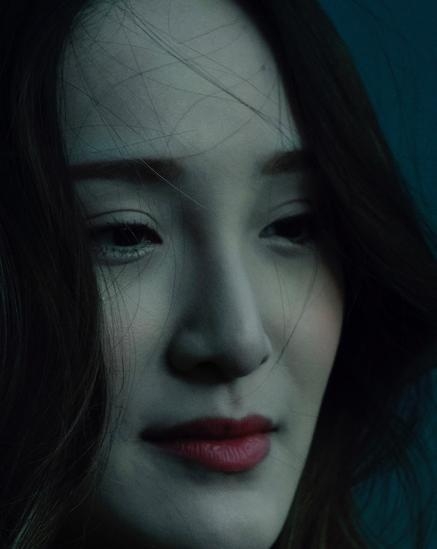
Anderson’s photographs of metropolitan men and women on the streets of Shanghai and Shenzhen, China taken over the last two years picture a world that is largely unknown to most Westerners. Shenzhen, China’s Silicon Valley, barely existed thirty years ago but today has some twenty million inhabitants. Shanghai, China’s biggest city, has a population of over 24 million. Between the smog and constant development a grey/blue light hangs over both these cities providing an almost surreal or theatrical illumination to Anderson’s portraits. Whatever our preconceptions, Anderson presents an up to date image of the reality that is modern urban China.

Working almost invisibly, and focusing in on tight close-ups that exclude all context except the unusual light on the faces of his subjects, what first struck Anderson was that people around the world have begun to look and act the same. Yet in the face of this observation he felt compelled to wonder “Who are these individual people? What do they dream about? What truth do these pictures convey?”

Exhibition runs through to October 20th, 2018

Danziger Gallery
95 Rivington Street
New York
New York
10002 USA
www.danzigergallery.com


PLANES, TRAINS & AUTOMOBILES

Posted on 2018-09-24

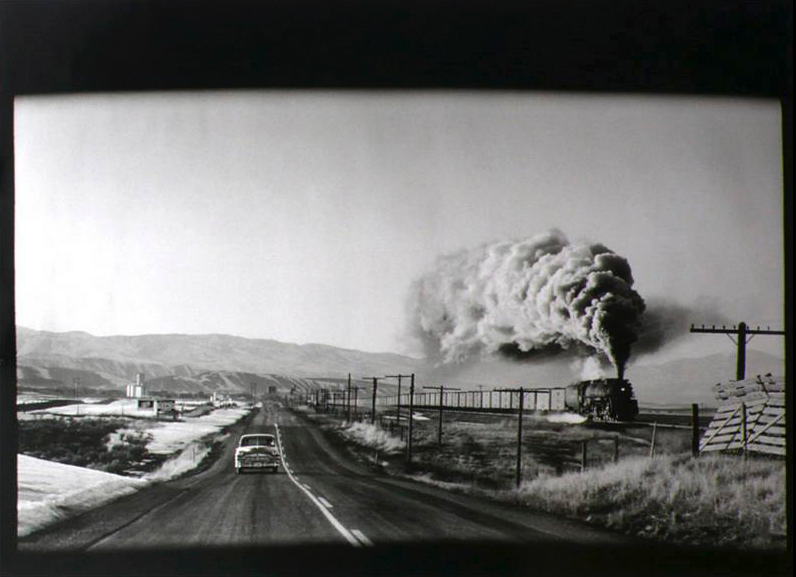
The images in Planes, Trains & Automobiles span the 20th century, crossing continents, technological developments, urban and rural landscapes and the new rituals and behaviours provoked by these ‘travelling machines’. Yet despite the photogenic allure of the vehicles themselves, the artistic focus here is on the human condition. From departures to arrivals, the station forecourt to the open road, the back seat of the car to the back carriage of a train, the courting couple to the lone figure, the works on display portray love, life, encounters, betrayal and loss through the lens of such international luminaries as Bruce Davidson, Elliott Erwitt, Jacques-Henri Lartigue, O Winston Link, Louis Stettner, and Sebastião Salgado.

Opposite – Elliott Erwitt, Steam Train Press, Wyoming, 1954

Exhibition runs through to October 20th, 2018

The Photographers Gallery
16 – 18 Ramillies Street
London
W1F 7LW

thephotographersgallery.org.uk


WILLIAM WEGMAN – POLAROIDS

Posted on 2018-09-24

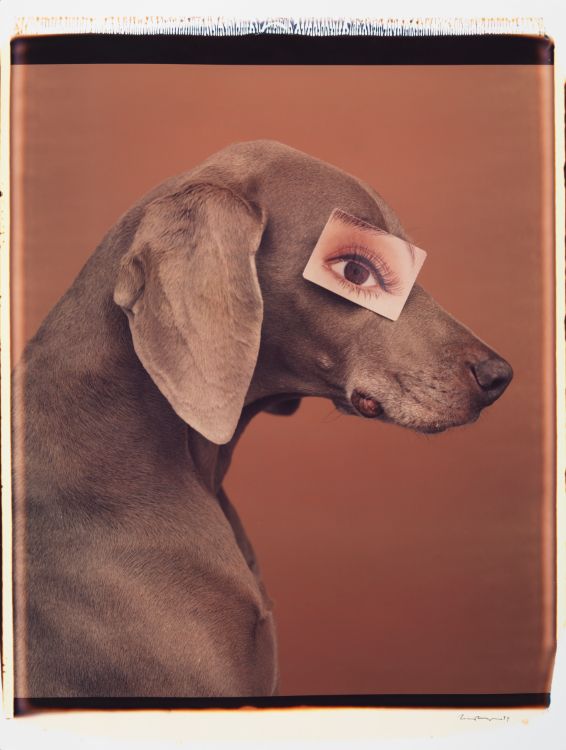
William Wegman is an internationally renowned artist and photographer, whose photographs, videos and paintings have been exhibited in museums and galleries across the world. He is best known for his on-going artistic collaborations with his Weimaraners, his lifelong muses.

In 1979, William Wegman was invited by the Polaroid Corporation to work with the recently developed 20 x 24 Polaroid camera. Inspired by this new medium, Wegman made some of his first colour photographs, continuing his collaboration with his dog Man Ray who had been central to Wegman’s 1970s black and white photographs and video work. Wegman continued to work extensively with the 20 x 24 Polaroid camera until 2007 when Polaroid stopped producing film. In his over thirty years of working with this camera, Wegman explored a rich and wide range of themes from abstraction and anthropomorphism to surrealism, cubism and colour theory. Each new dog suggests new ideas and new ways of working. Fay Ray followed Man Ray in 1987 and her children and their children provided a large and on going cast of characters. Huxley-Parlour Gallery will be exhibiting a select group of unique 20 x 24 Polaroid prints from this important body of work. Dating from the 1980s through to 2001, all works are being exhibited in the United Kingdom for the first time.

Opposite – Eyewear II, 1994

Exhibition runs through to October 20th, 2018

Huxley-Parlour Gallery
3-5 Swallow Street
London
W1B 4DE

huxleyparlour.com


JENNY ODELL – NEO-SURREAL

Posted on 2018-09-24

Neo-Surreal is a body of work by the American artist and writer Jenny Odell. Odell completed this volume of work whilst artist-in-residence at the Internet Archive in 2017.

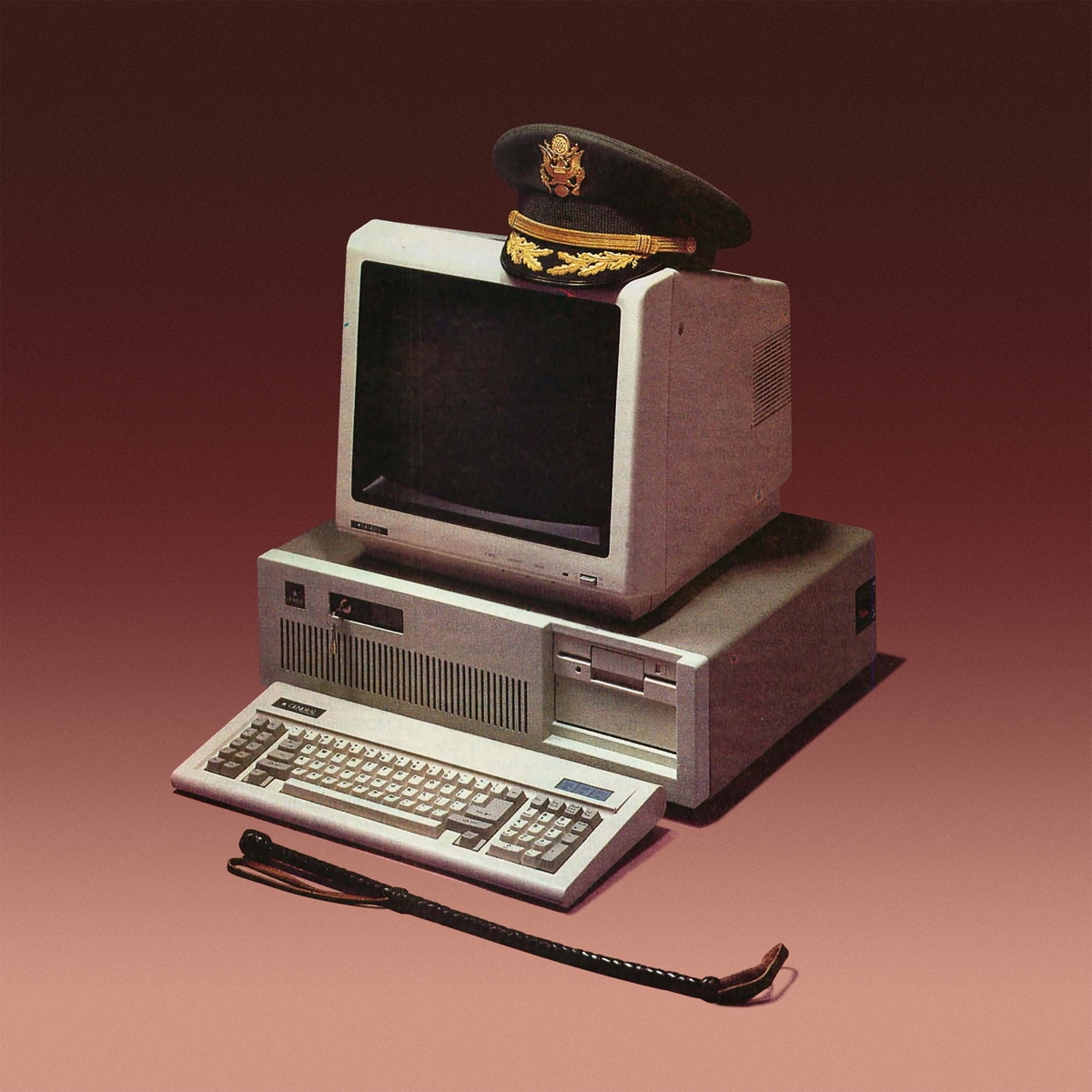
During her residency she came across a huge cache of the influential American computer magazine, BYTE, the covers of which playfully represent how commercial illustrations depicted computer culture in the 1980s. Odell extracted surreal imagery from the magazine ads and reconfigured this material into an image sequence that portrays the metaphors of computational culture at the time. Viewed in hindsight, and considering today’s technological present, these images embrace the surreal aspects of everyday technological objects while they also present the ways that the digital future was imagined 30 years ago.

Opposite – You Are Under Arrest. From the series Neo-Surreal, 2017

Exhibition runs through to October 24th, 2018

The Photographers Gallery
16 – 18 Ramillies Street
London
W1F 7LW

thephotographersgallery.org.uk


KURT MARKUS – MONUMENT VALLEY 2002-2017

Posted on 2018-09-17

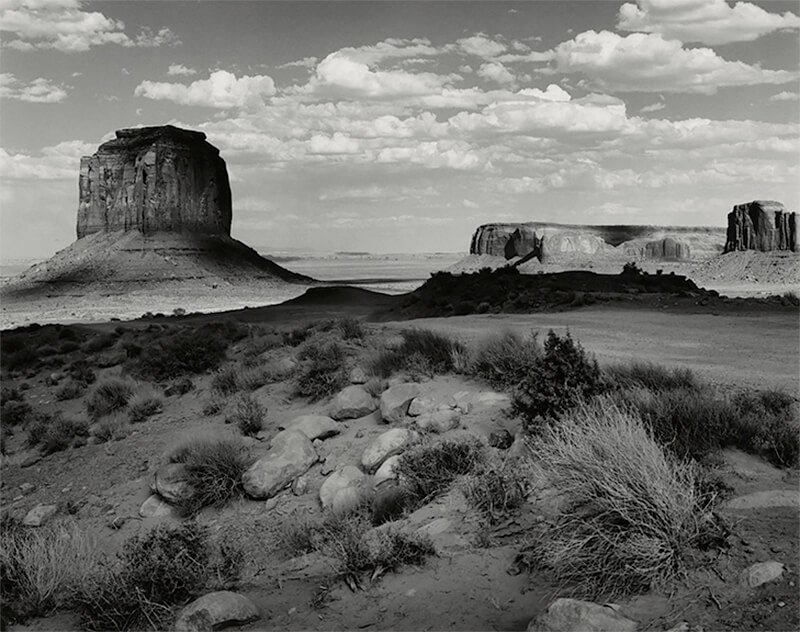
Monument Valley is located at the four corners region spanning Utah and Arizona on the Navajo Nation Reservation. Tse’Bii’Ndzisgaii, the Navajo name for Monument Valley meaning ‘clearing among the rock’, spans five square miles with fragile pinnacles of rock of sandstone that tower up to 1,000 feet. For hundreds of years, the Navajo have raised livestock and farmed small quantities of crops in the valley. Not just a place of habitation and livelihood, Monument Valley has significant meaning to the many Navajo who took refuge in the valley when forced out of Canyon De Chelly by the U.S. Army during the “Long Walk.” An 1868 treaty allowed their return to their ancestral homeland and established the Navajo Reservation. Other parts of Monument Valley have been added to the Navajo Reservation over time. Today, an estimated 100 Navajo people live in the valley. Monument Valley became popular with Hollywood when John Ford’s first of many movies, Stagecoach, was shot there in 1938, starring John Wayne, and making him a star, as well as putting Westerns in a respected film genre.

Kurt Markus made his first trip to Monument Valley in 2002, thanks to an assignment from Conde Nast Traveler, British edition. Kurt confessed he had no idea what he was in for on that first visit, thinking it a tourist’s destination and a backdrop for director John Ford’s well-know Westerns. For Markus, the John Ford film, The Searchers, “touched a rawness that, if you know a bit of the West you could watch John Wayne rage across the landscape and not be embarrassed by bad costumes and corny dialogue. Ford finally made the film only he could have made.”

Opposite – Monument Valley, 2011

Exhibition runs through to October 20th, 2018

Obscura Gallery
1405 Paseo de Peralta
Santa Fe
87505 NM

www.obscuragallery.net


HARRY CALLAHAN – STICKS AND STONES

Posted on 2018-09-17

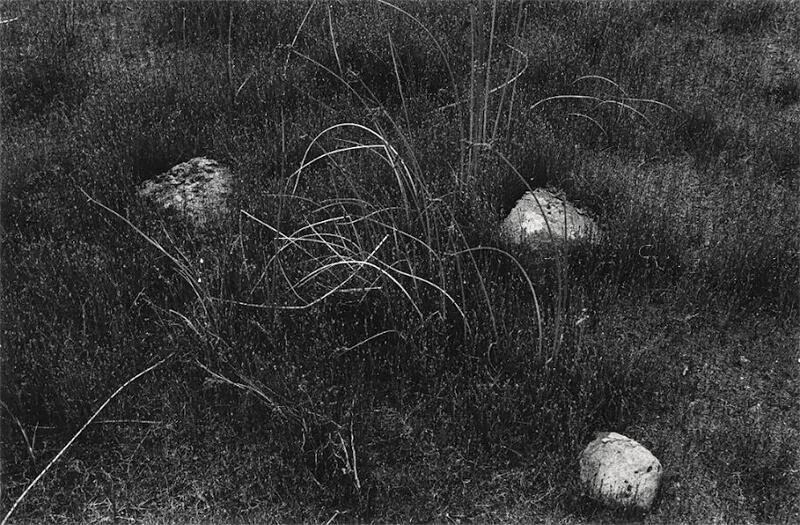
Featuring over 30 gelatin silver prints, the exhibition considers Harry Callahan’s photographic exploration of the natural world, from his initial experiments in Michigan in the early 1940s to Georgia landscapes made in the 1980s and early 1990s following his retirement from teaching. When viewed collectively, Callahan’s black-and-white studies of weeds, grasses, branches, and rocks masterfully demonstrate his ability to evolve a single genre over time by revisiting and expanding his conceptual and technical discourse.

One of the foremost American photographers of the 20th century, Callahan (1912-1999) learned to find visual inspiration in the natural forms of local landscape from photographic luminary Ansel Adams, whose technical mastery and environmental reverence Callahan greatly admired. When Callahan saw Adams’ remarkably rich and highly detailed 8 x 10” prints in the early 1940s, he asked Adams how he had achieved such results. Adams shared that he used a large format camera, made contact prints from the negatives, and photographed in his backyard – Yosemite.

Joshua Lutz

Opposite – Wisconsin, 1958

Exhibition runs through to October 20th, 2018

Pace/MacGill Gallery
537 West 24th St
New York
10022 NY

www.pacemacgill.com