GIDEON RUBIN

Posted on 2020-06-01

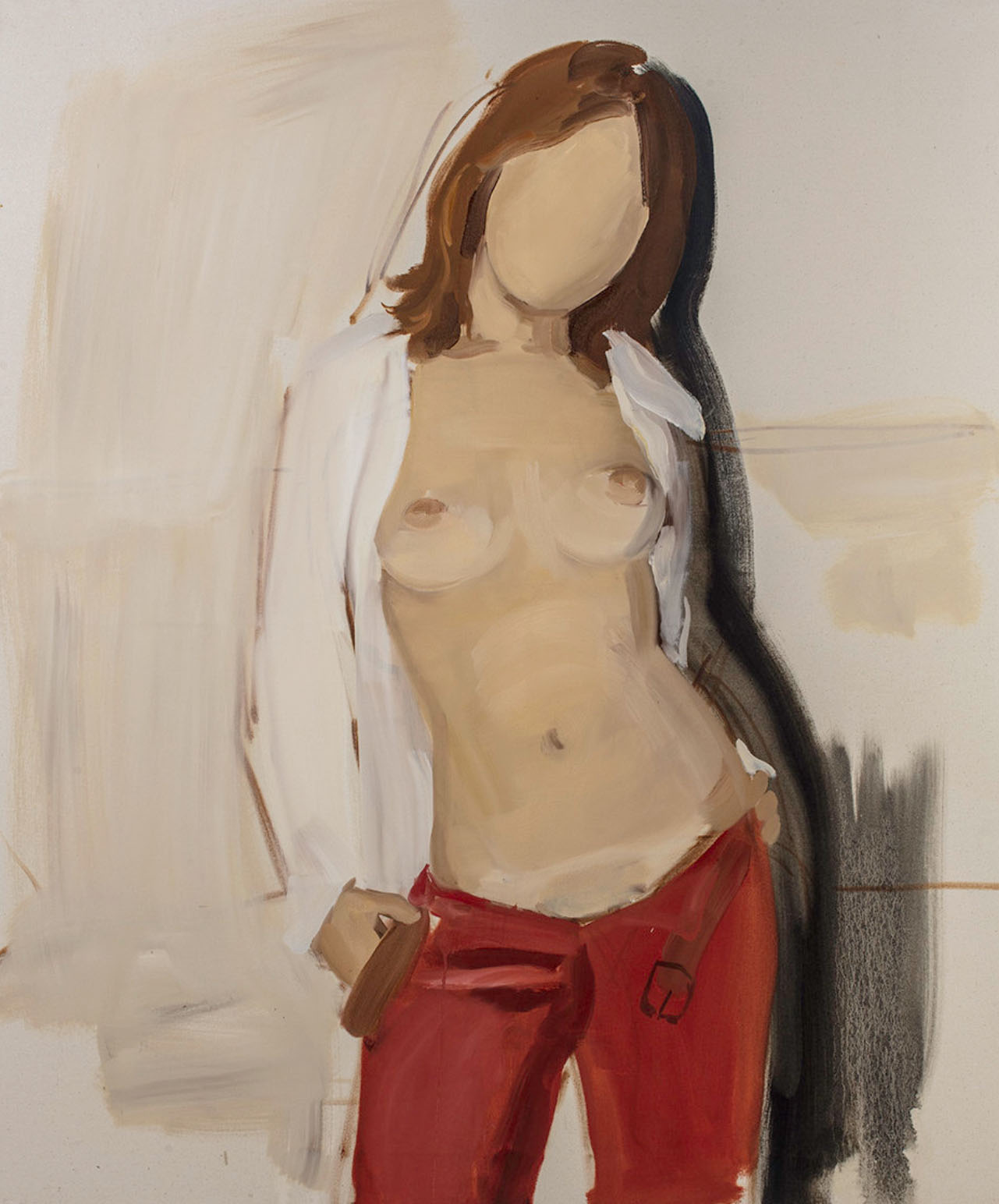
Rubin creates paintings where the figures are rendered without their facial features. Thus the gaze of the viewer is not captured by physiognomy, but by the atmosphere unleashedbby the entire images; the subjects are characterized by their positions and attitudes, by the way they move in space and dress.
Evanescent and melancholic, Rubin’s works speak of a past or a recollection that has surfaced in memory. The paint is dense and seductive, with fluid strokes that describe intimate atmospheres and complicity between the subjects portrayed. With their forcefully evocative character, these figures trigger direct empathy in the viewer. The subjects are depicted during everyday activities; the artist draws us into moments of elusive intimacy. A couple walking with arms around each other, a young woman undressing, flowers gradually wilting become part of a temporal dimension of slowness and calm. Landscapes are barely indicated settings, colors that stand out, revealing parts of untouched canvas.
The delicate colors used by Rubin, sandy tones, grayish blues, milky whites, combined with the multiple brushstrokes on the canvas suggest the desire to bring something almost forgotten back to life and give it permanence. The viewer can complete the missing details using his own memories.

Opposite – Red Trousers, 2019

Exhibition runs through to October 10th, 2020

Monica De Cardenas
Via Francesco Viganò 4
20124 Milan
Italy
www.monicadecardenas.com


MARIA LASSNIG – ODE TO NEW YORK: DRAWINGS 1968–1980

Posted on 2020-06-01

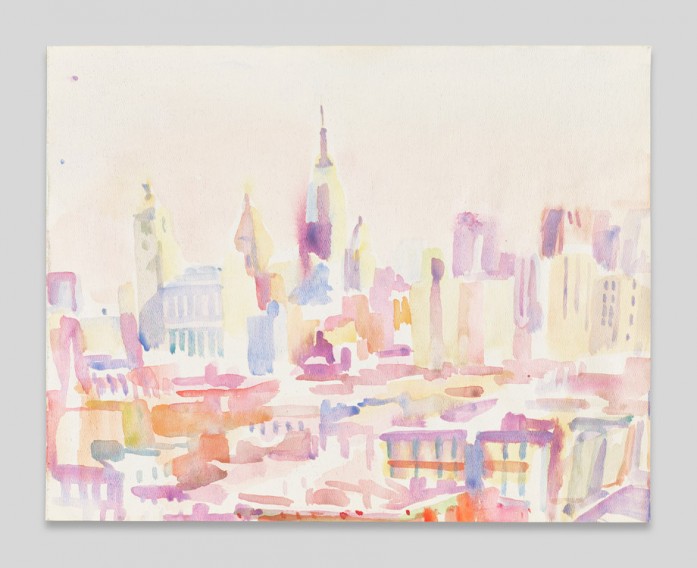
Developed in close collaboration with the Maria Lassnig Foundation, the exhibition comprises six watercolors and nine pencil drawings depicting Maria Lassnig’s time in New York City from 1968–1980, alongside film footage shot by Lassnig documenting her fascination with the performers, musicians, and pedestrian dancers that she encountered on the pulsating streets of Manhattan.

Opposite – Untitled, c. 1979

Exhibition runs through to July 13th, 2020

Petzel Gallery
456 W 18th Street
NY 10011
New York

www.petzel.com


FRED EVERSLEY – CHROMOSPHERES II

Posted on 2020-05-25

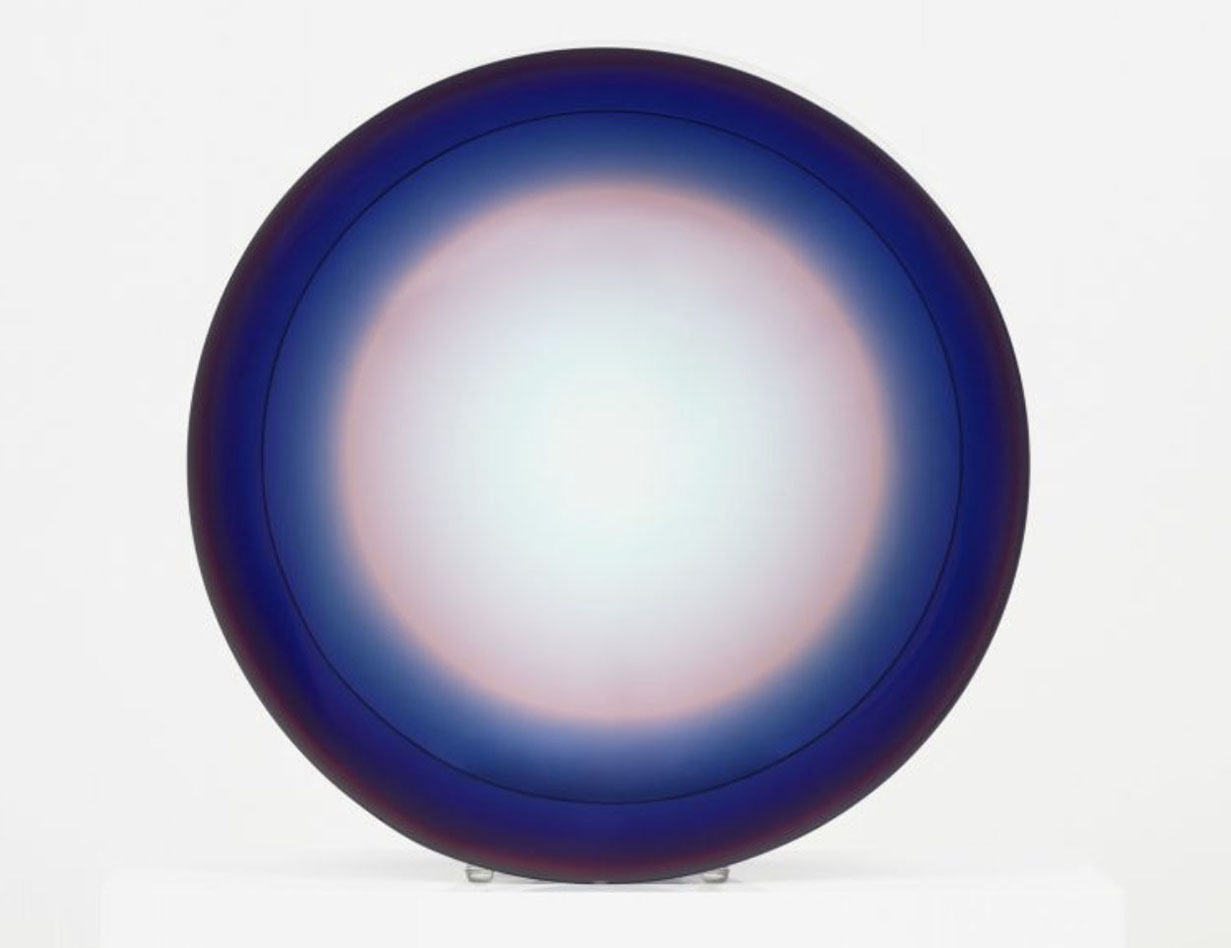
A key figure in the Light and Space movement and one of the most representative artists based in Los Angeles during the postwar period, Fred Eversley has dedicated a significant portion of his five-decade-plus career to the development of the Parabolic Lenses that are his signal achievement. These objects also constitute one of the most sustained and iconic bodies of work in American minimalism and are ravishing visual conundrums whose subjects are no less than the movement of energy—including light, sound, and even metaphysical forces—and the mechanisms of perception.

Important for historical reasons, Eversley’s recent lenses are equally significant for technical ones: until a late burst of creative output necessitated in part by circumstance, the artist had not attempted three- and two-color sculptures of this kind since the 1970s. These works, therefore, represent both a return and a bold step forward, as Eversley brought decades of experience to
their making.

Opposite – Untitled (parabolic lens), (1969) 2019

Exhibition runs through to June 17th, 2020

David Kordansky Gallery
5130 W. Edgewood PL.
CA. 90019
Los Angeles

www.davidkordanskygallery.com


21st CENTURY LANDSCAPES

Posted on 2020-05-25

While landscape painting dates back to antiquity, it only became a serious genre when artists began using landscapes as a retreat from the complexities of modern life. The 19th century brought landscapes to the forefront through plein air techniques. The landscape became a reflection of the philosophy when previously, landscapes were simply an image of pastoral idyll.

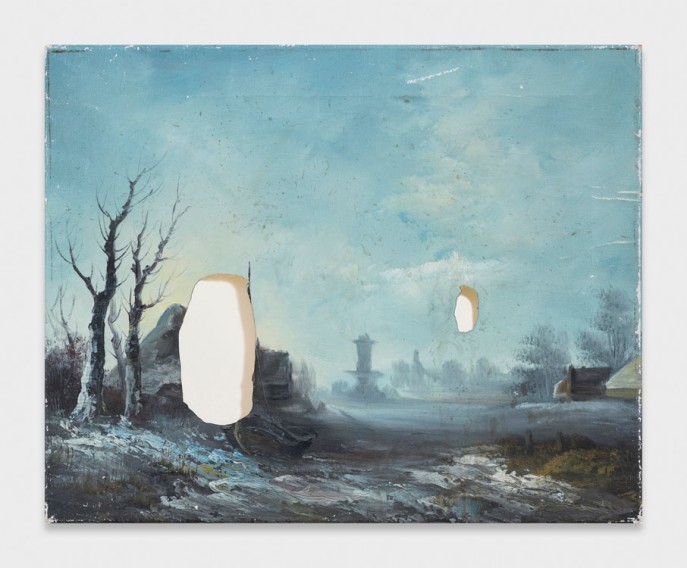
The effects of the anthropocene on art have intensified with time. Today we are faced with new challenges: climate change, environmental destruction, and population density. The 21st century has an even more strained relationship with nature and an even greater dependence on technology. Our ecological crisis marked the collapse of traditional landscape, and modern gives way to contemporary. We have a radical new conceptualization of landscape, no longer tethered to factual depiction. Our perception is distorted by digital aesthetics which results in new, imagined landscapes. Scenes that could only be afforded by contemporary technology are present in the works by Yael Bartana, Thomas Eggerer, Sean Landers, Adam McEwen, Rodney McMillian, Sarah Morris, Seth Price, Stephen Prina, Dirk Skreber, John Stezaker, Nicola Tyson, and Corinne Wasmuht. Today, we can only dream of the bucolic landscapes of the past while we try to make sense of the present.

Opposite – Tears IX, 2018

Exhibition runs through to June 8th, 2020

Petzel Gallery
456 W 18th Street
NY 10011
New York

www.petzel.com


LIXIA

Posted on 2020-05-25

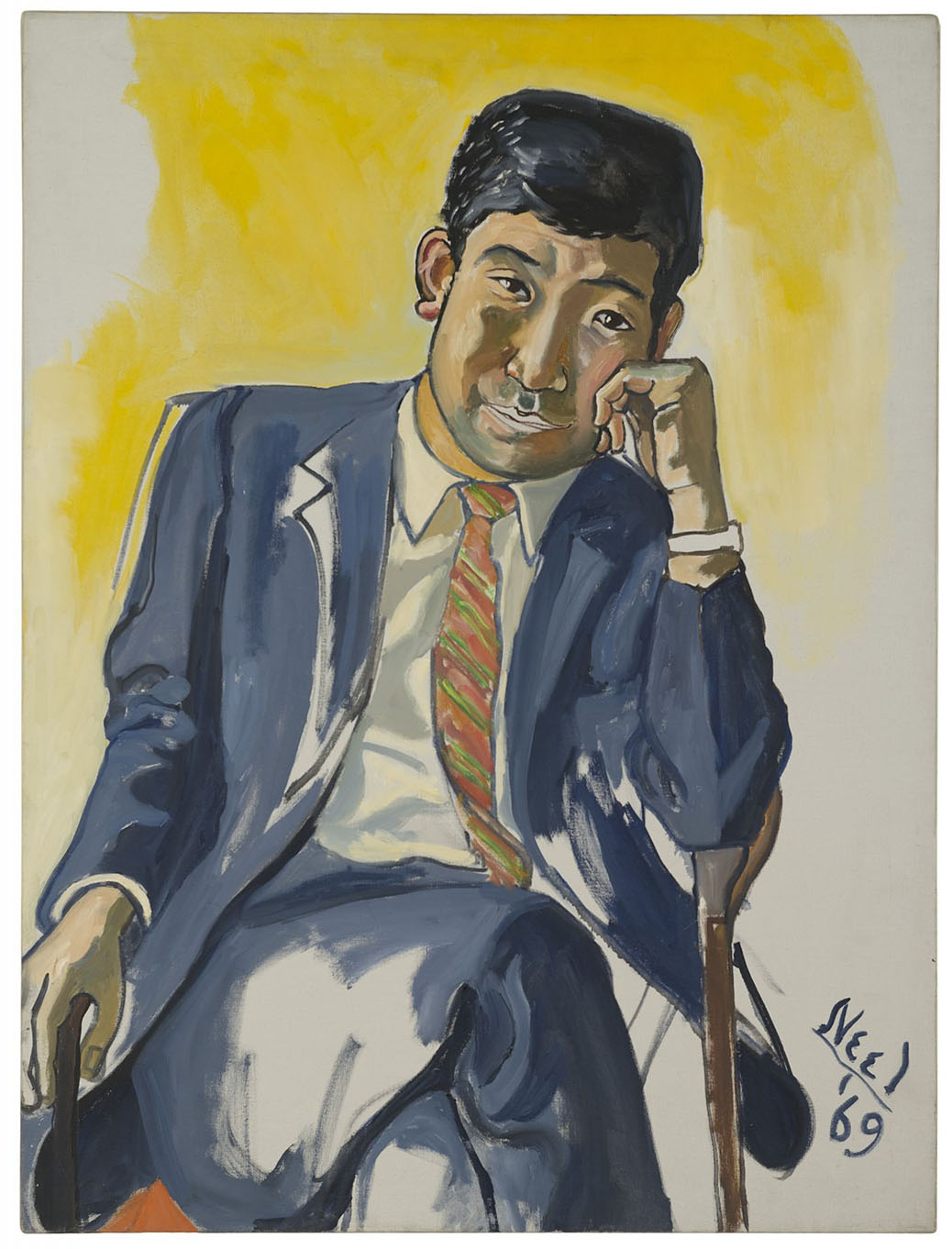
Lìxià presents major works by Josef Albers, Harold Ancart, Mamma Andersson, Lucas Arruda, Michaël Borremans, Noah Davis, Suzan Frecon, Isa Genzken, Yun Hyong-keun, Yayoi Kusama, Giorgio Morandi, Oscar Murillo, Alice Neel, Neo Rauch, Josh Smith, Wolfgang Tillmans, Luc Tuymans, and Lisa Yuskavage. The online-only exhibition also includes reflections on the city of Hong Kong from the gallery’s artists who have exhibited or are scheduled to exhibit there.

Opposite – Alice Neel, Takahara Shindu, 1969

Exhibition runs through to June 1st, 2020

David Zwirner
525 West 19th Street
NY 10011
New York

www.davidzwirner.com


ELMGREEN & DRAGSET – SHORT STORY

Posted on 2020-05-18

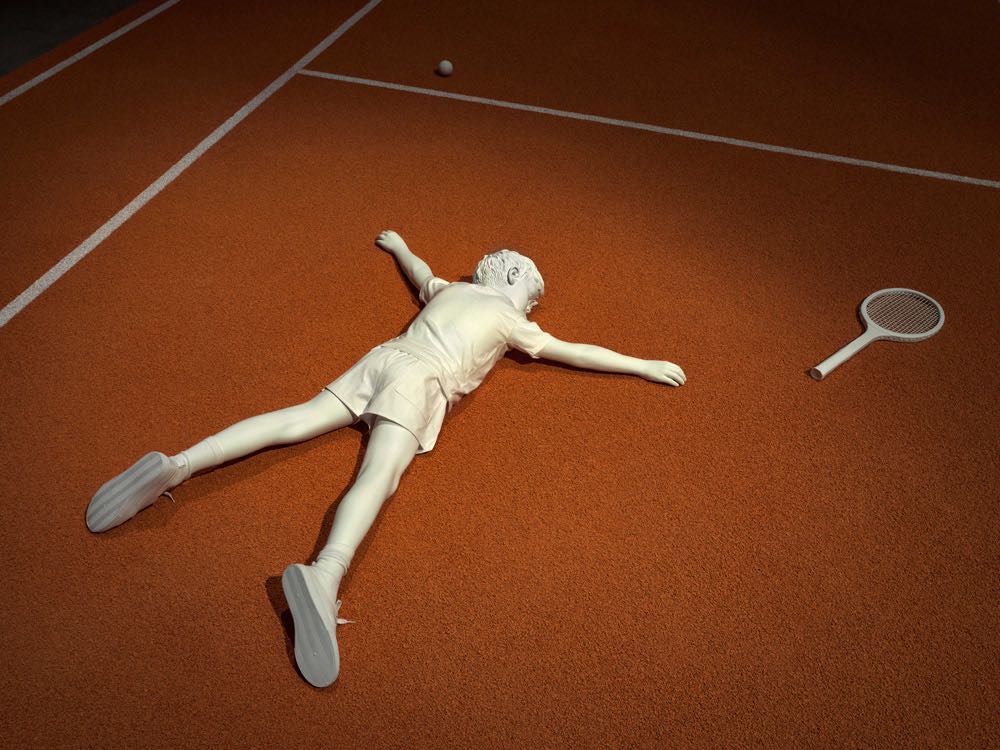
Short Story sets the stage for a match between two boys. When entering the gallery space visitors will encounter an almost full-size tennis court, slightly raised off the ground. A net in the middle divides the two players and creates a sort of horizontal diptych. The white lines painted onto the orange-brown ground surface not only indicate the set rules of the sport, but also visually remind us of the grid principles of Modernism and the road markings that regulate our behavioural patterns within public space. The white-painted figurative bronze sculptures of the boys are placed diagonally at opposing ends of the playing field, small and isolated on the large plane. The boys’ bodies and gazes are turned away from each other, the dialogue and play between them have come to an end. Rather than joy, a discomfort seems to have arisen from the game, for both “winner” and “loser”. The scene is a freeze frame capturing the charged moment ensuing a defeat, where the audience, as onlookers, fulfil the narrative. Was it a fair game? Is it ever a fair game?

Opposite – Kev, 2020

Exhibition runs through to August 2nd, 2020

König Galerie
St. Agnes – Alexandrinenstr, 118-121
10969 Berlin
Germany

www.koeniggalerie.com