BAPE X ASTRO BOY

Posted on 2016-01-18

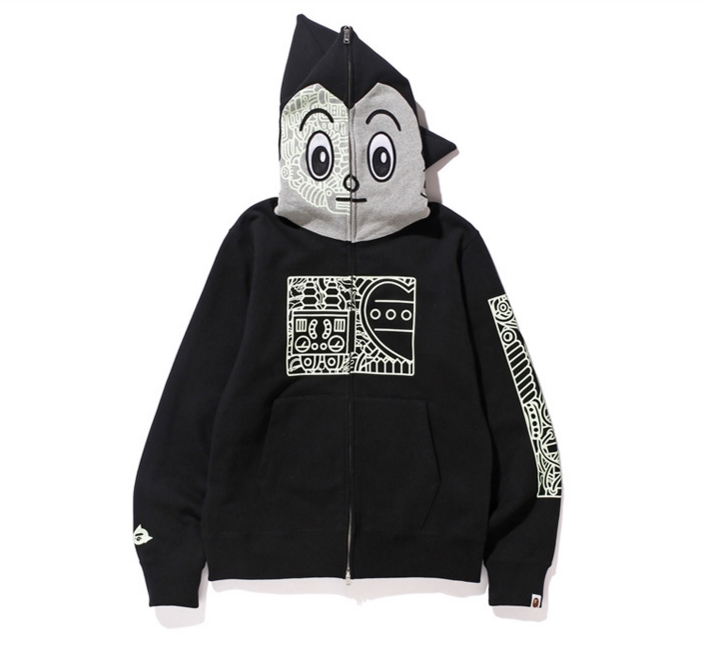
BAPE has turned to Astro Boy as a partner for its latest capsule collection, and has emblazoned the Japanese manga character’s image on a whole range of new pieces.

Alongside three separate T-shirt designs and two figurines, the centerpiece of the collection is the classic BAPE Shark Face hoodie, which has been redesigned to feature Astro Boy’s face and signature hair. Meanwhile, glow-in-the-dark motifs pick out the design on the chest, front, back and hood of the garment.

The full collection drops January 23rd and will be available from BAPE stores worldwide.

us.bape.com


MASAHISA FUKASE – SOLITUDE OF RAVENS

Posted on 2016-01-18

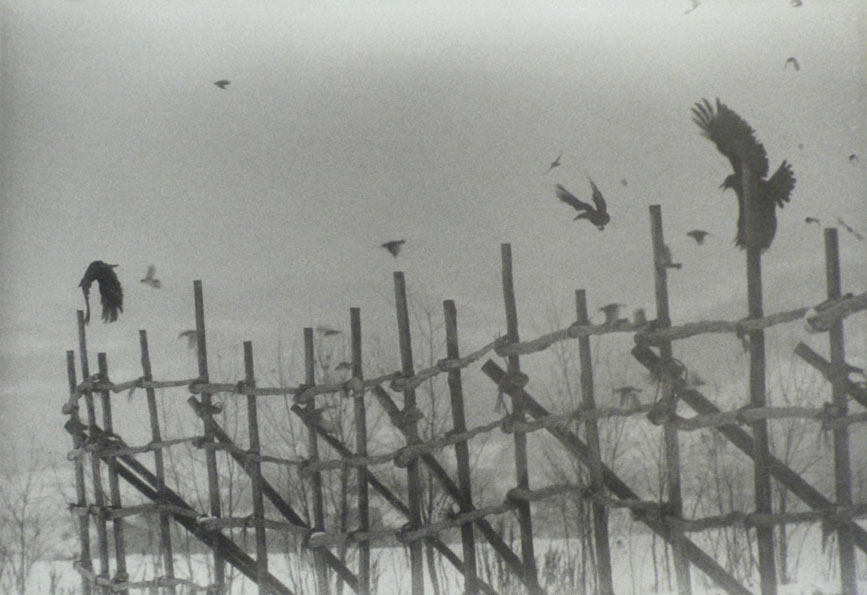
Masahisa Fukase’s Karasu (Ravens) was made between 1976 and 1982 in the wake of his wife Yōko Wanibe divorcing him. The visual narrative of the series revolves around the anthropomorphic form of the raven. Dead and alive the birds punctuate the work; lone birds reduced to shadow puppetry against the snow or dislocated flocks that mimic the grain of the photographs themselves. Although interjected with other subjects such as blizzard streaked streets or the fleshy form of a nude masseuse, it is the recurrent presence of the ravens that sets the ominous and cinematic tone of the work.

Akira Hasegawa in her poetic afterword to the book summarises Ravens with the following: “In the case of Masahisa Fukase, the subject of his gaze became the raven. For him, the “raven” was both a tangible creature and a fitting symbol of his own solitude”. At the end of the project in 1982 Fukase himself enigmatically wrote that he had “become a raven”.

Opposite – Nayoro, 1977

Exhibition runs from February 24th to April 23rd, 2016

Michael Hoppen Gallery
3 Jubilee Place
London
SW3 3TD

www.michaelhoppengallery.com


HAMBURGER EYES – CYBERNETICS

Posted on 2016-01-18

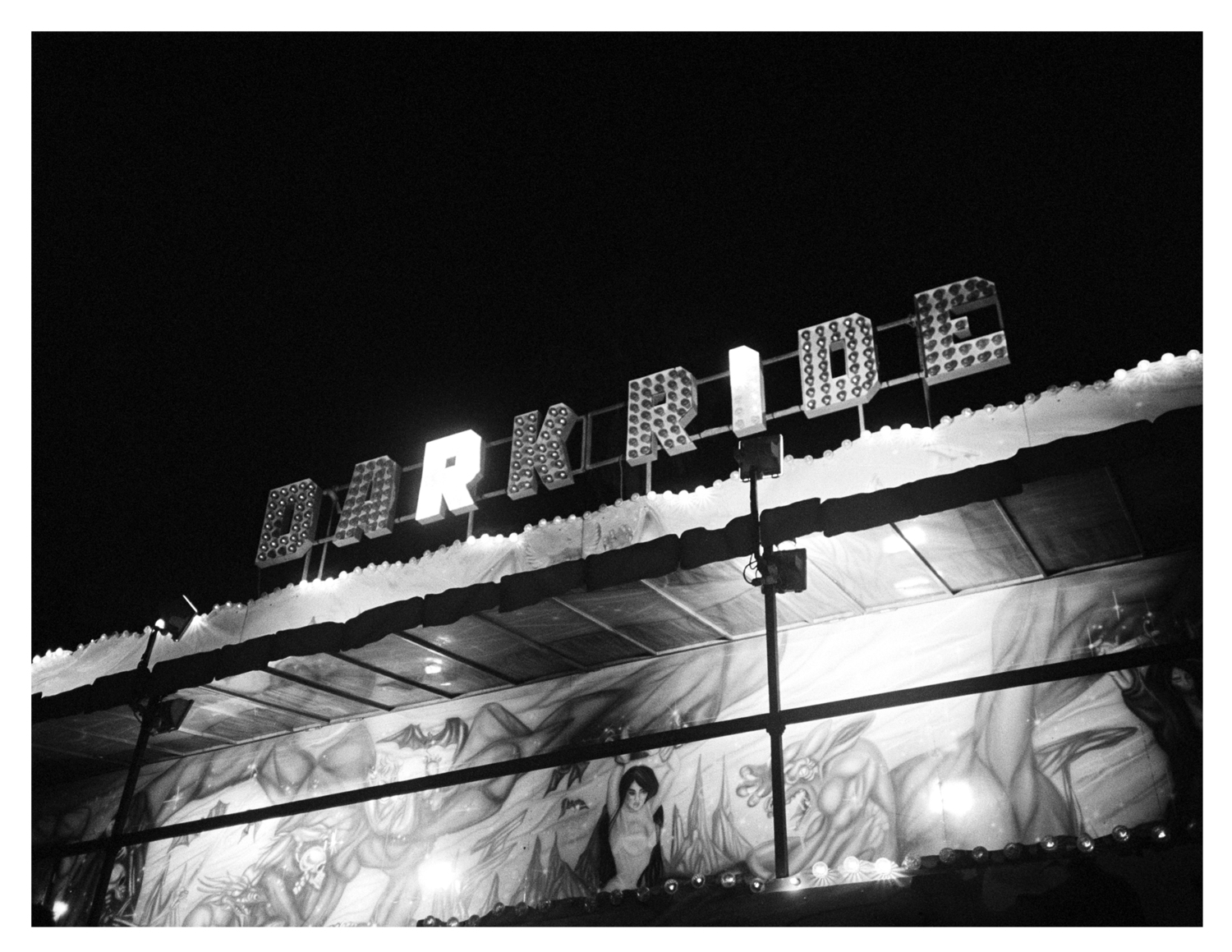
Hamburger Eyes “CYBERNETICS” is a retrospective photography exhibition celebrating 15 years of independent publishing. On display will be 500+ photographs ranging from 8″ x 10″ to4’ x 6’. All exclusively selected for this prolific show.

CYBERNETICS is the scientific study of control and communication in animals and in machines. It seeks to develop general theories of communication within complex systems, whether those systems be mechanical, physical, cognitive, biological or social. Cybernetics is a meta-theory that is relevant when what is being observed incorporates a closed-signaling loop, in other words, where action by the observed generates some change in its environment and that change is reflected in that system in some manner that triggers a change.

Friedrich von Schiller, wrote in “Letters on the Aesthetic Education of Man, 1795”

The transition from a suffering state of sensuality towards an intellectual activity, will not happen except through a middle state of aesthetic freedom. … There is no other way to make the rational part of our mind sensible, without being illustrated in a previous state of aesthetic energy.

Opposite – Michael Hernandez

Exhibition runs through till February 28th, 2016

Slow Culture Gallery
943 N. Hill St
Los Angeles
CA 90012

www.slowculture.com


ANDREW GBUR

Posted on 2016-01-18

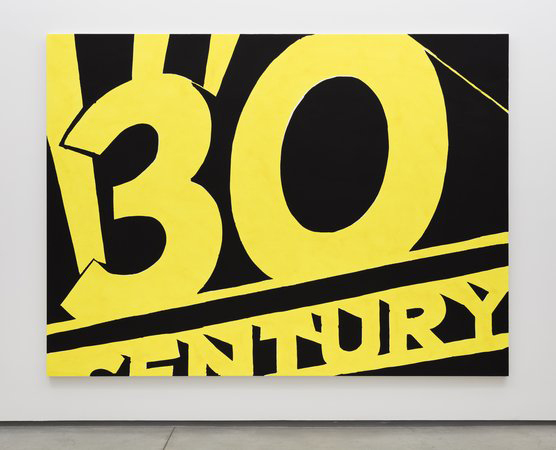
Gbur pares down familiar images to two or three opaque shades, applied contiguously in cartographic blocks. While the resultant pieces are recognizably depictive, the acts of isolation, visual reduction and repetition void their subject matter of its wonted semantic content. While past exhibitions have been limited to a single repeated subject, the artist’s driving concern with seriality manifests here as a network of motifs and themes, endowing the exhibition with a discernable rhythmicity. The works are mired in post-war Art History, repurposing the aesthetics of Pop Art and Minimalism to interrogate the value – or lack thereof – of contemporary symbols and signage.

Gbur’s practice is complexly, omnivorously appropriative: he derives his raw material from a variety of sources, recycling specific, identifiable iconography (the 20th Century Fox logo, a Suicide album cover), as well drawing from a more general pictorial lexicon (a sword, a pair of pants, a pumpkin). The paintings are cannibalistic, stripping pictures of nutritional value and re-presenting them as skeletons of themselves. A smiley face, the contemporary emblem of banal pleasantry, in Gbur’s hands reads as both vacant and malevolent; rather than serving its standard purpose of evincing happiness, the smiling hieroglyph instead reconnoiters the potential for deception and psychological violence intrinsic to pictographic communication. By inverting and nullifying his subject matter’s semiotic associations, Gbur bolsters his surfaces. The paintings’ initial impression of Minimalistic austerity deteriorates upon close investigation: subtle indications of their making – material inconsistencies, paper left behind by stencils, minute drips – quietly riddle the works.

Opposite – 30th Century, 2015

Exhibition runs through to February 28th, 2016

team (gallery, inc.)
83 Grand Street
10013 New York
USA

teamgal.com
  

RAMS

Posted on 2016-01-18

In a secluded valley in Iceland, Gummi and Kiddi live side by side, tending to their sheep. Their ancestral sheep-stock is considered one of the country’s best and the two brothers are repeatedly awarded for their prized rams who carry an ancient lineage. Although they share the land and a way of life, Gummi and Kiddi have not spoken to each other in four decades. When a lethal disease suddenly infects Kiddi’s sheep, the entire valley comes under threat. The authorities decide to cull all the animals in the area to contain the outbreak. This is a near death sentence for the farmers, whose sheep are their main source of income, and many abandon their land. But Gummi and Kiddi don’t give up so easily – and each brother tries to stave off the disaster in his own fashion: Kiddi by using his rifle and Gummi by using his wits. As the authorities close in the brothers will need to come together to save the special breed passed down for generations, and themselves, from extinction

In theatres February 5th, 2016

www.netopfilms.com


JAN DE MAESSCHALCK – DOMESTICATED

Posted on 2016-01-18

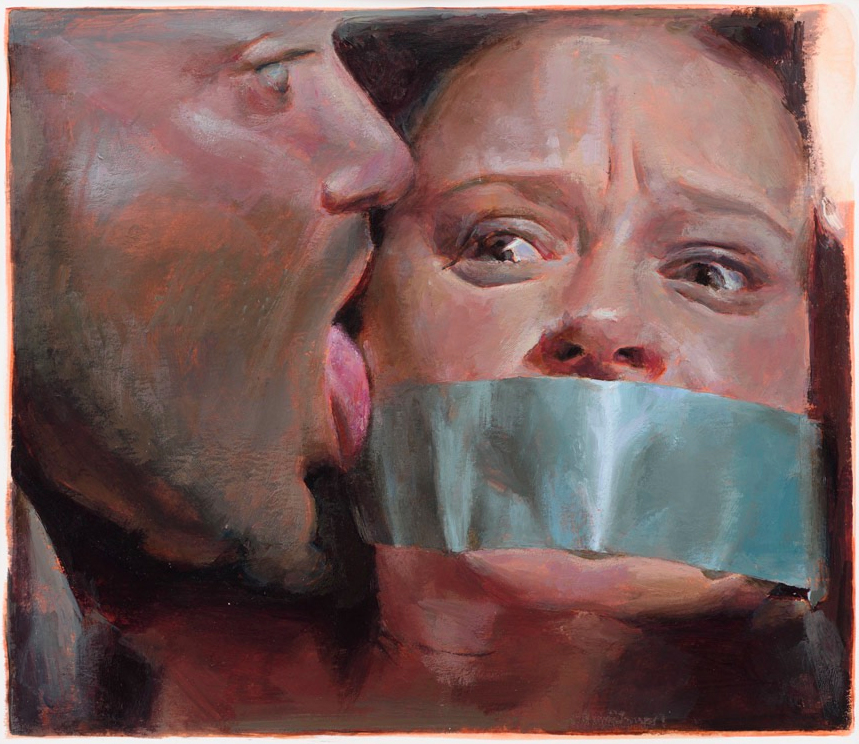
Two years ago, when De Maesschalck’s parental house was cleared out, the artist discovered in the attic a stack of old newspaper cartoon sections he used to read as a child. They ended up in his studio and when he started looking through them in the spring of 2015, he noticed how certain images had ingrained themselves into his memory. Also, it appeared to him that the patina of the fragile paper would serve as an ideal base tone for skin colour. The papers became the carriers for a new series in which the printed images, like tattoos, shimmer through a number of intriguing gazes. He reads the paper, the printed image, and eliminates and creates. With accurate speed he paints portraits with diluted acrylic paint. The fictional characters are lost in thought or hint at, whether consciously or not, associations with that which is visible to them but which nonetheless remains hidden from us. As always, De Maesschalck manages to stimulate our imagination. The domestic origins of this new series already largely explain the emotional charge of the title which nonetheless hides another meaning as well. When, after a long time, an animal, plant or human being adapts to its environment, this is referred to as domesticated or tamed behaviour. This also applies to the social adaptation of the human being.

Opposite – Sofa, 2015

Exhibition runs through to February 28th, 2016

Zeno X Gallery
Godtsstraat 15
2140 Antwerp
Belgium

www.zeno-x.com